
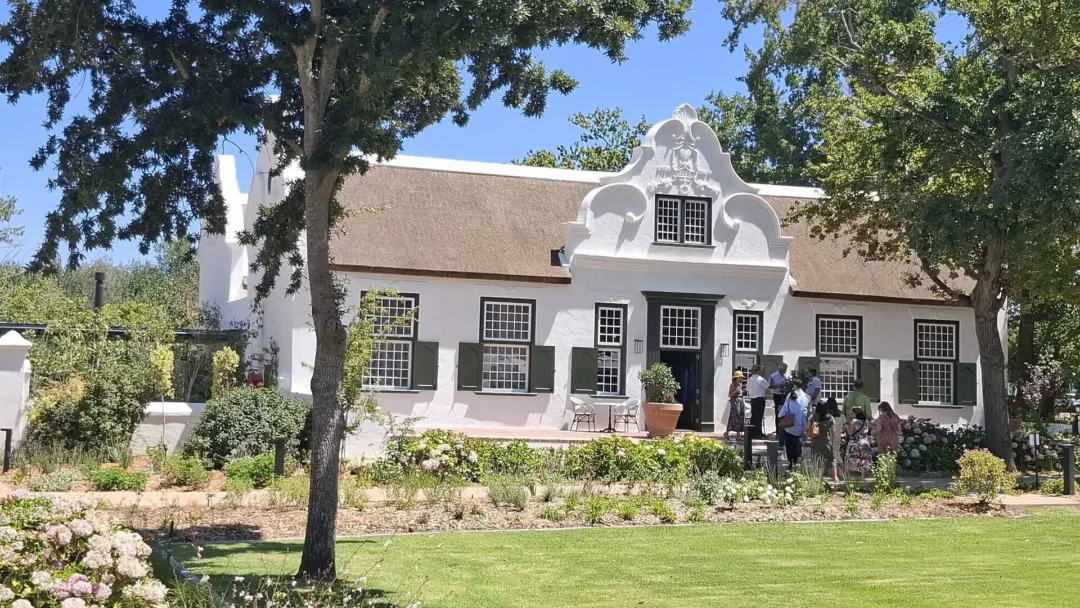
History sits lightly at Blaauwklippen Wine Estate, but it runs deep throughout the property. And with the reopening of its iconic Manor House and adjacent Jonkershuis this week, it marks the return of one of the Cape’s most enduring landmarks, restored with painstaking care and a deep respect for its past.
Founded in 1682 and recognised as the first registered company in South Africa and the oldest wine farm in Stellenbosch. The Manor House itself dates back to the mid-1700s, exemplifying quintessential Cape Dutch architecture with whitewashed walls, ornate gables, and a thatched roof, while the Jonkershuis, built in 1720, stands as one of the estate’s earliest surviving structures.
For more than three centuries, the estate served as a place of arrival for traders, travellers, farmers, and wine lovers. That legacy was disrupted by the devastating fire of April 2024, which severely damaged the Manor House, Jonkershuis, and surrounding structures. Over the past two years, Blaauwklippen has worked to complete a careful restoration of the buildings, guided by an appreciation for their heritage.
Bringing the past into the present
Working alongside heritage specialists and artisans, original materials were salvaged and reintroduced wherever possible, including historic bricks and Delft porcelain fragments uncovered during restoration. The result is a space that feels historically grounded yet elegant, evoking the richness of the past with visible, tactile reminders, while simultaneously offering a sense of contemporary luxury with modern comforts throughout.
Roelof van den Berg, CEO and co-owner of Blaauwklippen, notes that the process was not about creating something new, but about reinstating buildings that remain integral to the estate’s identity and character.
“Blaauwklippen has always been a working estate with a strong sense of place, and the Manor House and Jonkershuis are a vital part of that story. Reopening them has revived that sense of continuity, honouring where we came from, while making sure that the estate remains relevant and welcoming to visitors today,” he says.
Olebogeng Manhe, Chairman and co-owner of Blaauwklippen, adds that the reopening reflects a longer-term commitment to preserving the estate’s role within Stellenbosch.
“The estate carries a rich history that must be respected, but as stewards, we also have a responsibility to ensure it remains relevant and active. A central priority of the project was to conserve its historical character, while still updating and modernising facilities to ensure they continue to serve the estate, its people, and its visitors.”
The Manor experience today
The updated interior designs, led by Cape Town–based designer François du Plessis, reflect this philosophy, balancing classical structure with warmth and restraint. Textured fabrics, layered prints, and subtle colour references echo the surrounding vineyards and granite outcrops – the “blue stones” that gave Blaauwklippen its name.
“We reintroduced a classic, luxurious feel that alludes to the estate’s history, complemented by a creative, colourful, and slightly eclectic finish,” says du Plessis. “The design celebrates the natural beauty of the region while remaining true to the soul of Blaauwklippen.”
The restored Manor House now offers 11 luxury accommodation units in total. It features eight en-suite rooms across three categories, ranging from 26 to 42 square metres, with two rooms opening onto private terraces. The Jonkershuis houses another three generous suites, each with a separate bedroom, lounge, and bathroom, and terraces that extend the living space outdoors.
Gas fireplaces in every room create an intimate atmosphere during cooler evenings, while a shared swimming pool, tucked into the historic grounds, offers a retreat for warmer days.
Neil Markovitz, CEO of Newmark Hotels & Reserves, which manages the property, describes the project as one of their most exciting and meaningful restorations to date. “This project represents a profound milestone. It demanded determination, craftsmanship, and an unwavering commitment to excellence. We are proud to welcome guests back to experience the sophistication and character of Blaauwklippen Manor once again.”
In addition to expanding its accommodations, the reopening of the Manor and Jonkershuis has reconnected Blaauwklippen to its long-standing role as a place of gathering and exchange. From its days as a stop along the early postal route between Cape Town and Stellenbosch, to pioneering South Africa’s first Zinfandel vineyards in 1977, and launching the popular Blaauwklippen Blending Competition in 1984, the estate has consistently balanced tradition with forward momentum.
Today, that balance comes back into view with the relaunch of its two heritage buildings, returning them to their central position within the life of the estate.
