
With the release of the 2025 matric results around the corner, we’re about to repeat a familiar habit – using a single set of end-of-school outcomes to judge the health of an education system that’s shaped long before Grade 12.
The 2024 matric class achieved a record 87.3% pass rate for the National Senior Certificate, the highest in our country’s history. Perhaps unsurprisingly, the achievement has sparked questions about whether our country’s matric pass mark should be raised from 30%. It’s an understandable argument – but it’s not putting the focus about quality outcomes on the right point in the education journey of our learners.
As any builder will tell you, it’s not advisable to try and decide how high the roof of a house should be when the foundations are cracked. If South Africa wants a fair and ambitious matric standard, we have to start where learning begins – which is in the first 2 000 days of every child‘s life, in early childhood development programmes and in appropriate languages of instruction.
Unfortunately, South Africa’s education history hasn’t prioritised these learning cornerstones, and that means the learning foundations are still shaky at best. Recent local benchmarking from the Department of Basic Education’s Funda Uphumelele National Survey (FUNS), which assessed 27 838 learners across 710 public schools, found that only about 31% of learners in Grades 1 – 3 meet home-language reading benchmarks, while 15% of Grade 3 learners cannot read a single word. The National Reading Barometer projects that by 2026 around two-thirds of 10-year-olds may struggle to read for meaning.
The 2024 Thrive by Five Index painted a similar picture in preschool years. It found that only 42% of enrolled four-year-olds are “on track” in early learning, while 58% are already behind or far behind.
Unfortunately, by the time these learners reach Grade 10, 11 or 12, most of the gap that will shape their matric outcomes will already be firmly in place.
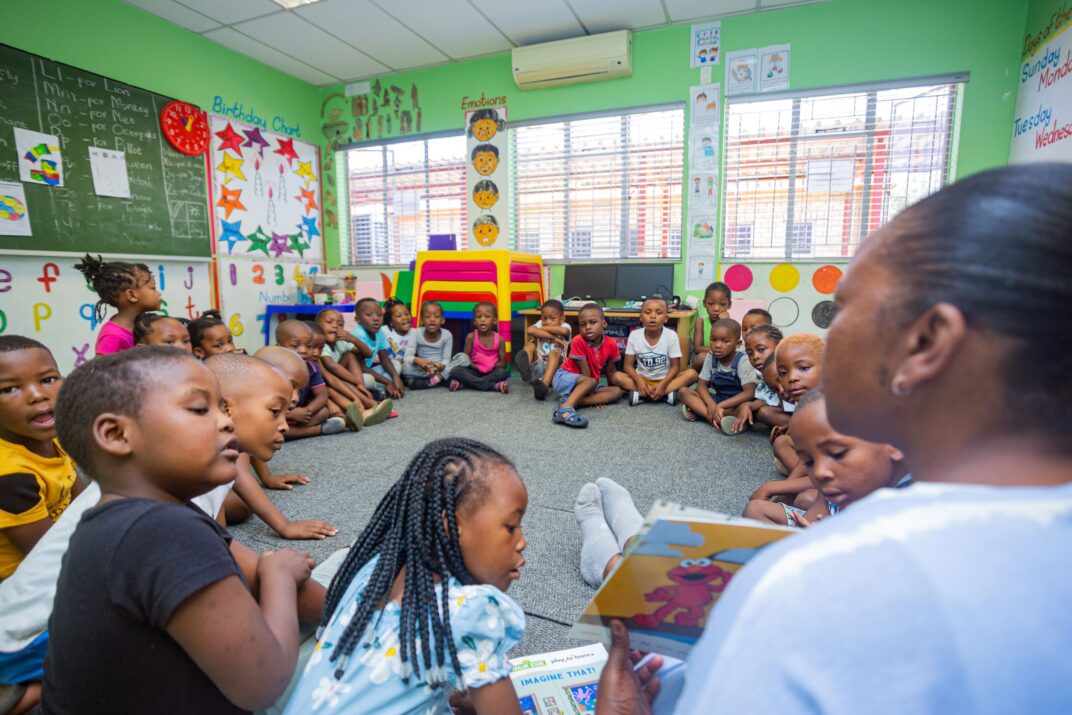
One of the biggest contributors to this early learning gap is language. Most South African children grow up speaking an African language at home, yet many walk into early learning centres where English dominates the classroom. A Sesame Workshop survey of parents of three- to six-year-olds confirmed this, finding that 91% use their home language with their children, and 84% believe home-language learning is important; yet 65% of their children attend centres where English is the main language of instruction. This mismatch confuses young learners, and it shows in their sub-par early learning outcomes.
Ironically for those parents who believe it’s important for their children to be educated in English, there’s actually no reason not to teach children first in the language they know best. In fact, rather than being a barrier to acquiring English skills later in life, learning in their home language early on is the best way to get there. One South African study found that learners who received mother-tongue instruction in the early grades performed significantly better in English in Grades 4 – 6 than those who switched to English language instruction too early.
Dr. Naledi Mbude-Mehana, Deputy-Director General for Transformation Programme at the Department of Basic Education, summed it up best. Speaking at a recent literacy webinar hosted by Sesame Workshop South Africa, she said, “Parents must never be made to choose because it is not a choice. It is a learning through two or more languages and we must never put them in a situation where it must be an either or – it is both.”
In truth, the conversation about standards has to start long before Grade 12. In fact, it should start long before Grade 1. The first 2 000 days – from conception to a child’s 5th birthday – are a sensitive and powerful window for brain, body and emotional development. Nutrition, health and nurturing care in this period shape the brain architecture that later learning relies on. By preschool, children’s cognitive, language and social-emotional skills already reflect whether they received that early support.
Economists have shown for decades that investing in these early years delivers among the highest returns of any public investment. Nobel laureate James Heckman estimates returns of 7% – 13% per year through improved education, higher earnings and reduced social costs.
For South Africa, where so many young children still lack quality early learning, underinvesting in these formative years virtually guarantees poorer outcomes in later years, not to mention higher costs of remediation and lost human potential.
So, while I agree with those who argue that we should set standards that stretch young people rather than signal that we expect little from them, raising the matric pass mark without transforming the first six years of life and the first three years of school will only widen the gap between children who had strong foundations and those who did not.
If we are serious about excellence and equity, the real question is not whether the matric pass rate should be 30%, 40% or 50%. We need to be asking whether every child has been given a fair chance to excel long before they enter a matric exam hall. Higher expectations only make sense when we’ve ensured our nation’s learners are standing on firm ground when we want them to reach for the stars.
