
Its World Autism Awareness Day so lets talk about why Inclusive play can’t be an afterthought anymore.
As the world marks World Autism Awareness Day today, a growing reality is coming into focus: neurodivergence is far more common than many parents realise, yet play environments have not kept pace.
In South Africa, where access to specialised support can be limited, play often becomes one of the most accessible tools for development at home.
This year’s theme, “Autism and Humanity – Every Life Has Value,” reinforces a broader shift from awareness to inclusion, recognising neurodivergent individuals as equal participants in society, not on the margins of it.
For retailers like Toys R Us South Africa, that message is particularly relevant in the context of play; one of the most fundamental ways children learn, connect, and express themselves.
A growing and often overlooked reality
Globally, neurodivergence is far more common than many people realise. According to the World Health Organization, approximately 1 in 100 children worldwide are on the autism spectrum, while broader neurodivergent conditions, including ADHD, dyslexia, and sensory processing differences are estimated to affect up to 15-20 percent of children.
This means that in nearly every classroom, playgroup, and household, there are children who experience the world differently, yet many toys and play environments are still designed with a “one-size-fits-all” approach.
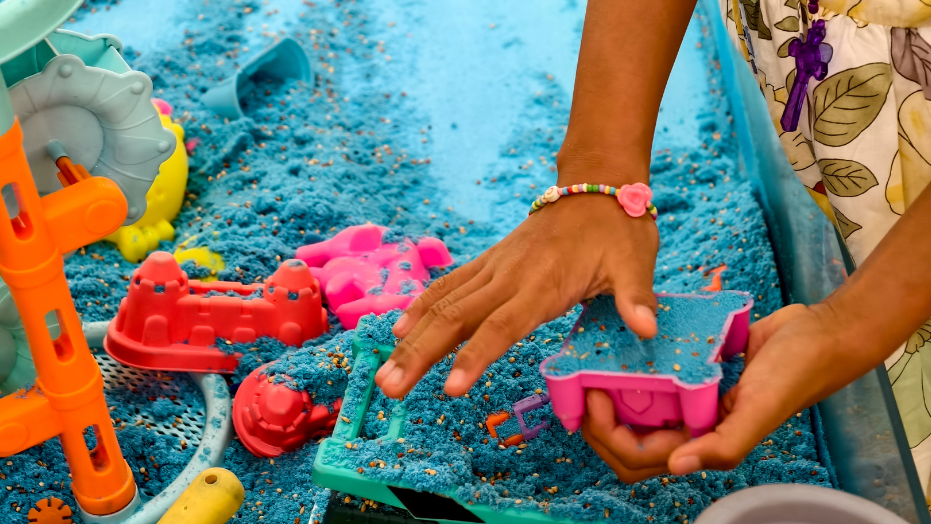
Why tactile play matters
“Toys are not just entertainment, they are tools for development, regulation, and connection,” says Catherine Jacoby, Marketing Manager at Toys R Us South Africa.
“For many neurodivergent children, tactile play is essential. It helps with sensory processing, emotional regulation, and focus,” she explains. “Yet historically, inclusive play hasn’t always been prioritised in mainstream retail and it’s something the industry is now starting to address.”
Jacoby notes that tactile toys, from textured balls and fidget tools to sensory putty and weighted plush toys, can help children manage overstimulation, improve concentration, and engage more confidently in play.
“Crucially, these toys are not niche, they benefit all children, not just those with diagnosed conditions,” she says.
“There’s a misconception that sensory or tactile toys are only for children with autism,” Jacoby explains. “In reality, they support a wide range of developmental needs. Inclusive play isn’t about separating children, it’s about creating environments where more children can participate fully.”
“We’re also seeing global brands take meaningful steps in this space,” she adds. “From sensory-friendly toys to more inclusive representation like the Barbie Fashionistas Doll with Down Syndrome and autism-friendly dolls, it signals a broader shift towards play that reflects the real diversity of children’s experiences.”
From awareness to action
The shift called for by this year’s global theme is clear: inclusion must be intentional.
For retailers, Jacoby explains that it means moving beyond symbolic gestures and ensuring that inclusive products are visible, accessible, and integrated into everyday shopping experiences, not hidden in specialist categories.
“At Toys R Us, we see it as our responsibility to make inclusive play more accessible to families,” she says. “That includes curating ranges that support different sensory needs, but also educating parents about why these toys matter.”
She adds that many parents are still navigating how to support neurodivergent children, often without clear guidance.
“Play is one of the simplest and most powerful ways to support development at home,” she adds. “When parents understand that, it becomes less about buying a ‘toy’ and more about giving a child a tool to thrive.”
A shared human experience
“As the world reflects on the theme “Every Life Has Value,” the role of play in building inclusive communities cannot be underestimated,” Jacoby says. “Play is where children first learn empathy, communication, and confidence and when play is inclusive, those lessons extend to everyone.”
“The goal is not to create separate experiences,” Jacoby concludes. “It’s to ensure that all children, regardless of how they experience the world, feel seen, supported, and included in something as simple, and as important, as play.”
